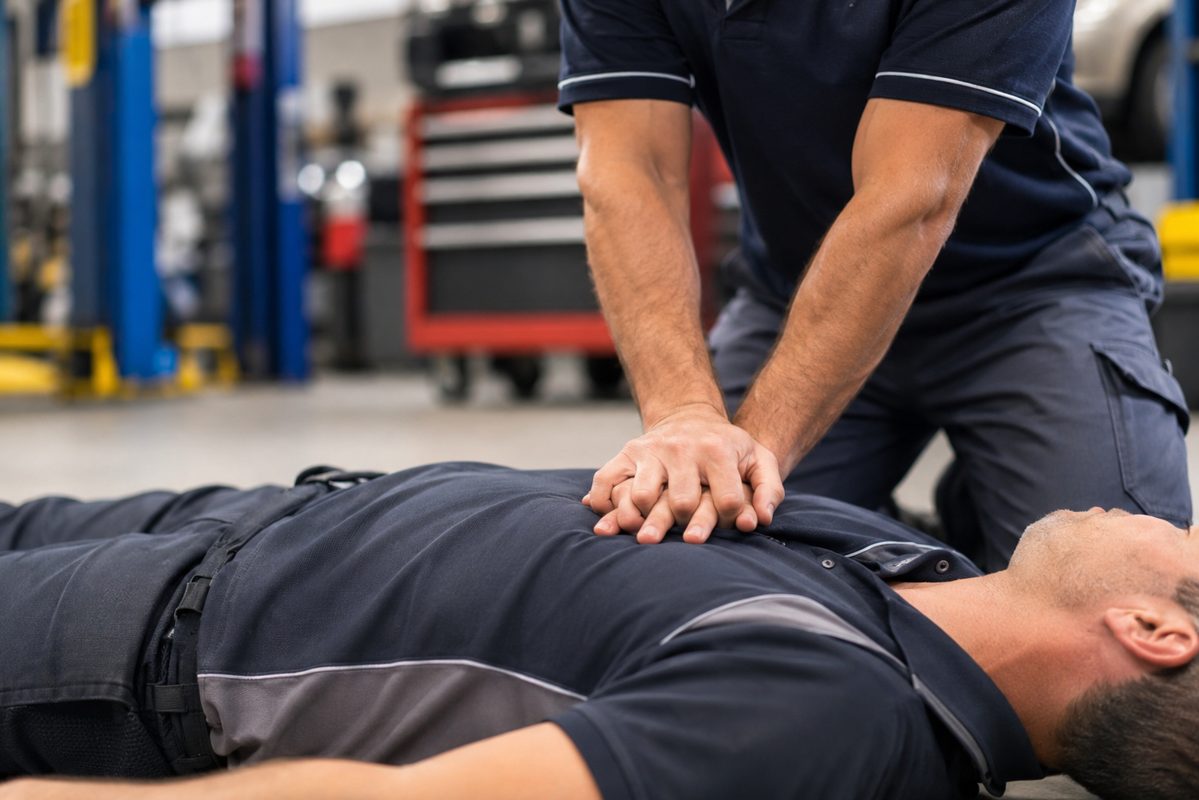
It is a normal morning. The workshop is busy, customers are arriving and the phone will not stop ringing. Then a colleague collapses beside a vehicle.
Would your team know what to do?
Most motor trade businesses prepare for fires, spills and workplace injuries. A sudden medical emergency deserves the same attention. The person needing help could be an employee, the business owner, a delivery driver or a customer waiting for their car.
The question is straightforward: how ready is your workplace to respond?
Recognise when someone needs immediate help
Cardiac arrest occurs when the heart suddenly stops pumping blood effectively. Someone who is unresponsive and not breathing normally needs immediate action. Occasional gasping is not normal breathing.
Make sure it is safe to approach, call Triple Zero (000), start CPR and use an automated external defibrillator (AED) as soon as one is available. Put the phone on speaker and follow the emergency operator’s instructions. If you cannot give rescue breaths, give chest compressions rather than doing nothing. Early action can save a life.
Check your workplace before an emergency
A first aid kit on the wall is a starting point. Your people also need the skills, equipment and confidence to respond.
These five checks are a useful place to begin.
1. Who knows what to do?
Check who holds current first aid and CPR training. Think about coverage across opening hours, including Saturdays, early starts and periods when your usual first aider is on leave. If everything depends on one person being present, review your arrangements.
2. Where is the nearest defibrillator?
If you have an AED, everyone should know its location. It should be clearly marked and readily accessible.
If you rely on a nearby business or public facility, check its actual availability. A device inside a locked building will be of little help during your Saturday morning shift.
3. Would your team use it?
AEDs provide spoken and visual instructions and can be used by people without formal training. They assess the heart rhythm and only advise or deliver a shock when appropriate. Training builds confidence, but someone should not delay using an available AED because they have never used one before.
4. Is the equipment ready?
Appoint someone to check the AED according to the manufacturer’s instructions, including its readiness indicator, battery and electrode pad expiry dates. Include it in your regular workplace checks. NSW Health recommends assigning responsibility for maintenance and making the device part of the workplace’s emergency arrangements.
5. Can the ambulance reach the person quickly?
Make sure staff know the workplace address and the best entry point. Consider who will meet the ambulance, open gates and direct paramedics through the premises.
In a busy workshop or large dealership, finding the person should not become another delay.
Put it on this week’s toolbox agenda
Take ten minutes to walk through a simple scenario: someone collapses in the workshop.
Ask who calls Triple Zero, who starts CPR, who retrieves the AED and who meets the ambulance. Identify gaps and allocate responsibility for fixing them.
Review first aid training, equipment and access arrangements, and consider whether an AED should form part of your workplace response.
You do not want the first discussion about your emergency arrangements to happen while someone is lying on the workshop floor.
Further information and resources
For additional guidance on preparing for and responding to medical emergencies, visit the following St John Ambulance resources: